Tuesday, 15 July 2025

Smedmore, Umtamvuna Nature Reserve

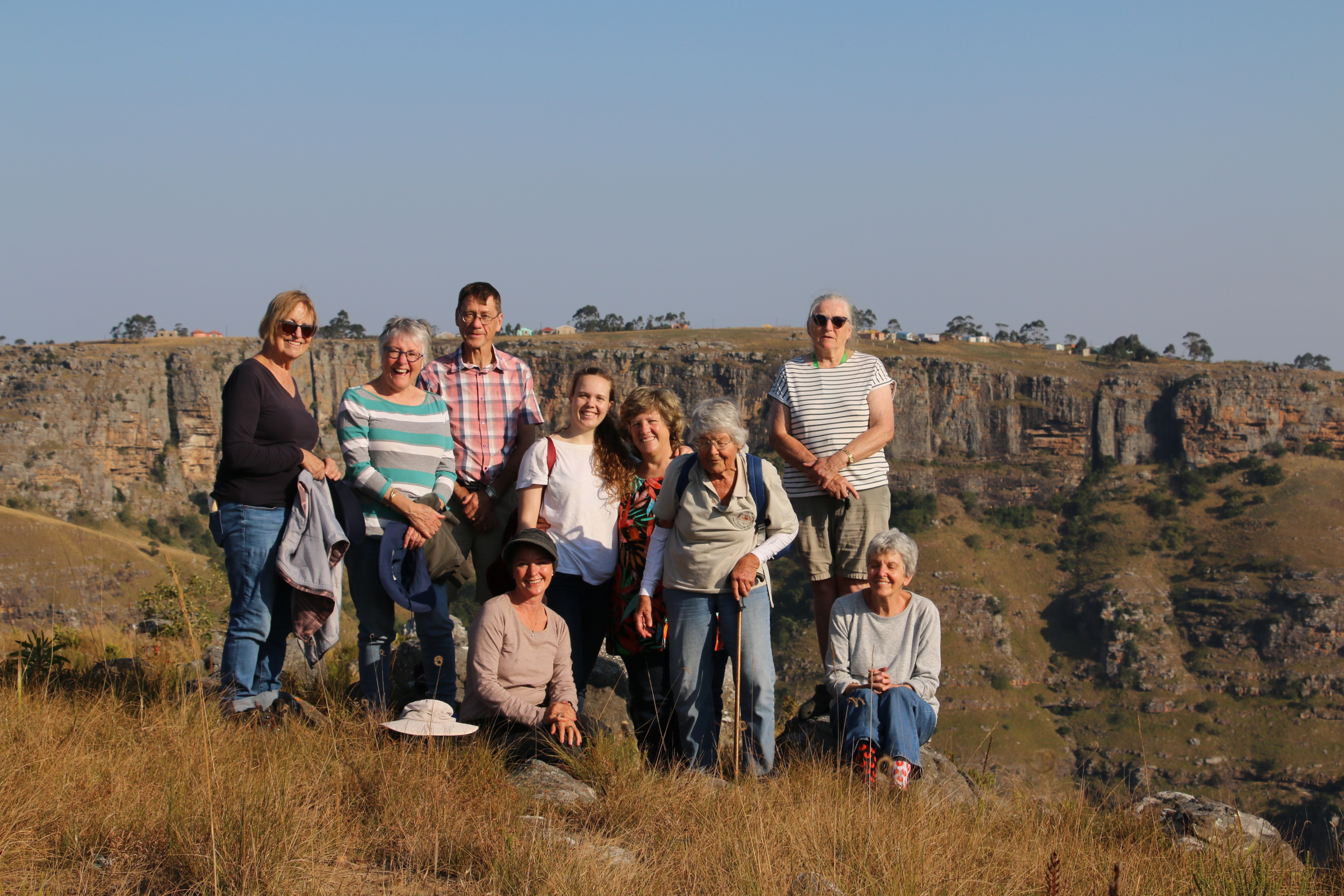
Thursday’s Pondoland CREW excursion was made all the more memorable by the participation of Kate and Graham, visiting from Renishaw Hills. Together, they co-authored the recently published Botanical Bounty of the Pondoland Centre of Endemism.

Kate, a talented botanical illustrator, had a specific goal for the day: to find a flowering specimen of Hesperantha mtamvunae to illustrate. This rare and delicate species is endemic to the Pondoland region and known only from the Umtamvuna Nature Reserve—making it a fitting subject for her detailed and sensitive work.

We met at Beacon Hill, and in a convoy of three Dusters and one Jimny, wound our way toward Smedmore. Plumes of dust rose behind us, curling through the air as we navigated our way into the reserve. Despite the fierce coastal winds that had swept through the area the previous week, we were thrilled to find a sheltered slope. Hesperantha mtamvunae is a rare, delicate flowering plant found only in the Umtamvuna Nature Reserve in southern KwaZulu-Natal. This slender, bulbous geophyte grows in damp grassland and forest margins and flowers between June and July. Because Hesperantha mtamvunae exists in such a limited area and specialized environment, it’s considered vulnerable and is protected within the reserve. 

We came across Lasiosiphon anthylloides, known for its fine-textured inflorescences and velvety stems, and Gnidia woodii, a member of the Thymelaeaceae family often noted for its medicinal value. Pimpinella caffra, with its fragrant umbels of white flowers, mingled with the cheerful yellow blooms of Argyrolobium harveyanum, a tough legume adapted to nutrient-poor soils.

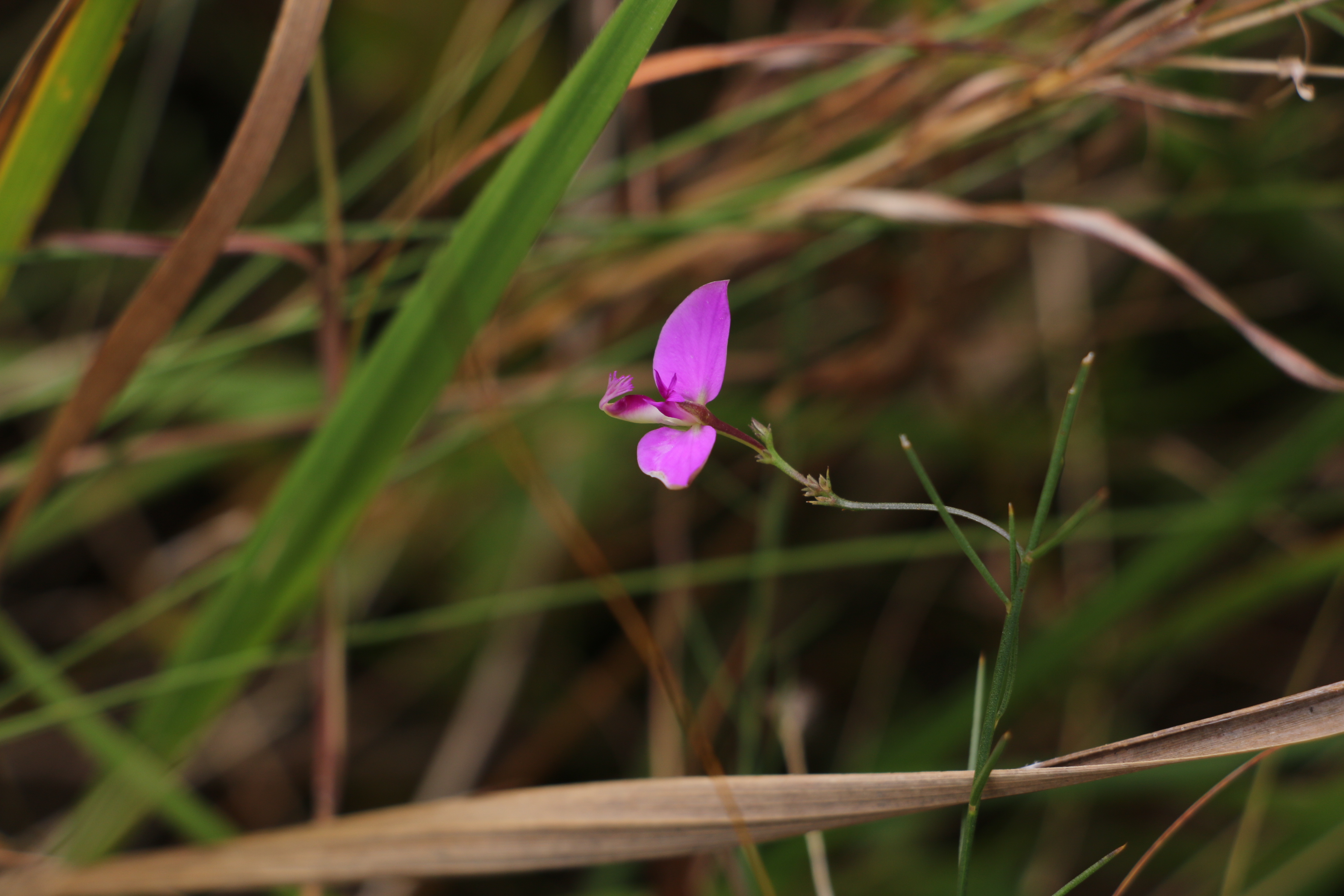
The lavender-blue flowers of Scabiosa columbaria—beloved by pollinators—stood out against the dry landscape. Delicate pink bells of Dierama igneum swayed in the wind, while the dainty Polygala refracta, with its recurved petals, nestled shyly among taller grasses.

After a relaxed lunch sitting in the grass—while doing our best to avoid pesky ants—we spotted Osyridicarpos schimperianus in flower. This is a  hemiparasitic shrub of the Santalaceae family. Kate kindly shared her knowledge about Indigofera tenuissima, a fine-leaved legume with delicate rosy flowers, well adapted to open, well-drained grasslands and valued for its nitrogen-fixing abilities.

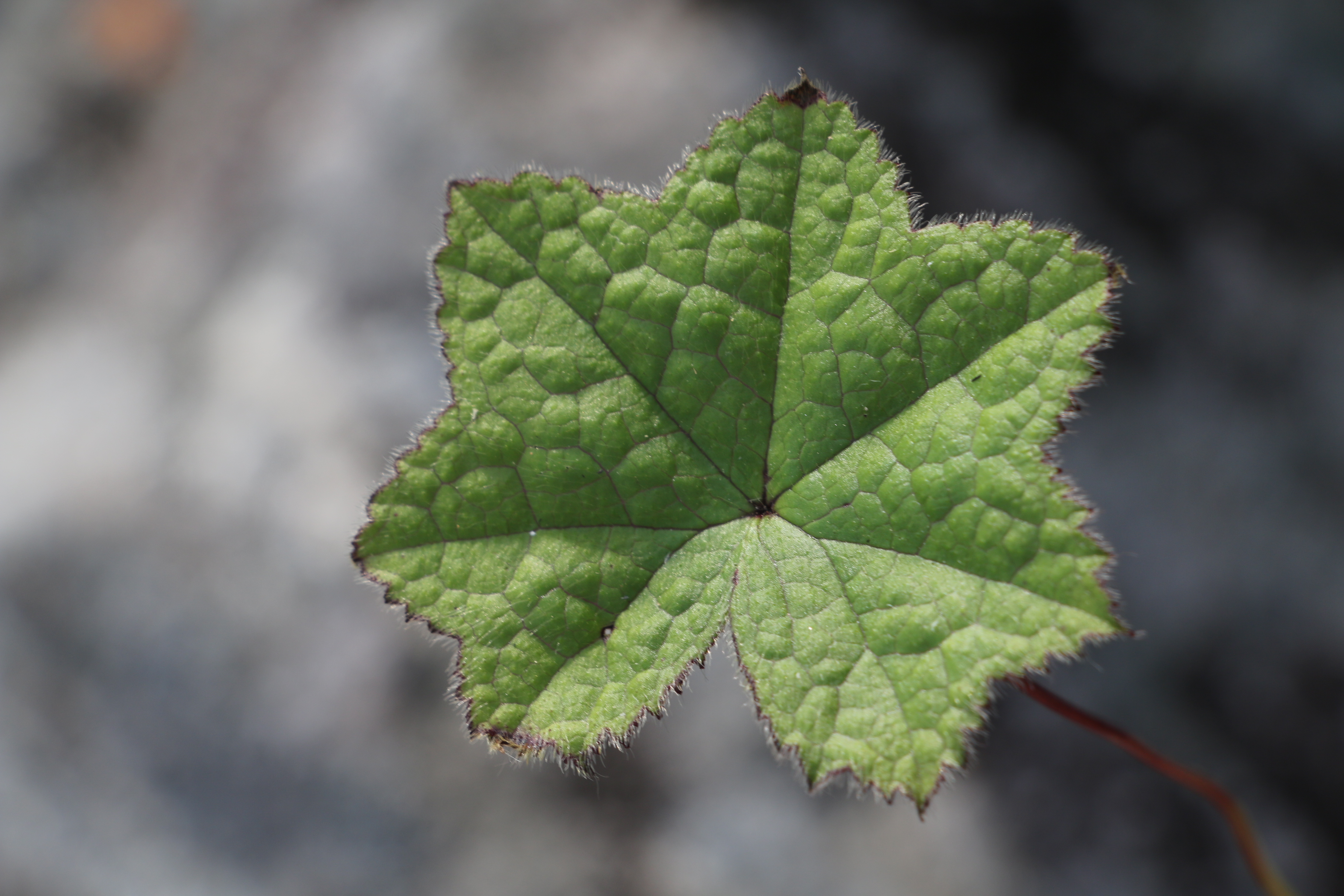
Ipomoea ficifolia caught our attention with its large mauve flowers and distinctive fig-like leaves. Dorothy and Ushi immediately began examining the foliage closely, carefully turning over the leaves to observe key identifying features. The species name ficifolia means “fig-leaved”—and it’s a perfect description. The palmately lobed leaves, typically divided into three to five deep lobes, closely resemble those of fig trees (Ficus spp.). This leaf shape is quite unusual within the Ipomoea genus, where heart-shaped or ovate leaves are much more common.

We eyed Triumfetta pilosa with some distaste—its persistent burrs are known to cling stubbornly to trousers, socks, and the fur of our four-legged companions. It’s nature’s clever seed-dispersal strategy, though decidedly less appreciated by those of us who have to pick them off, one by one, at the end of the day.

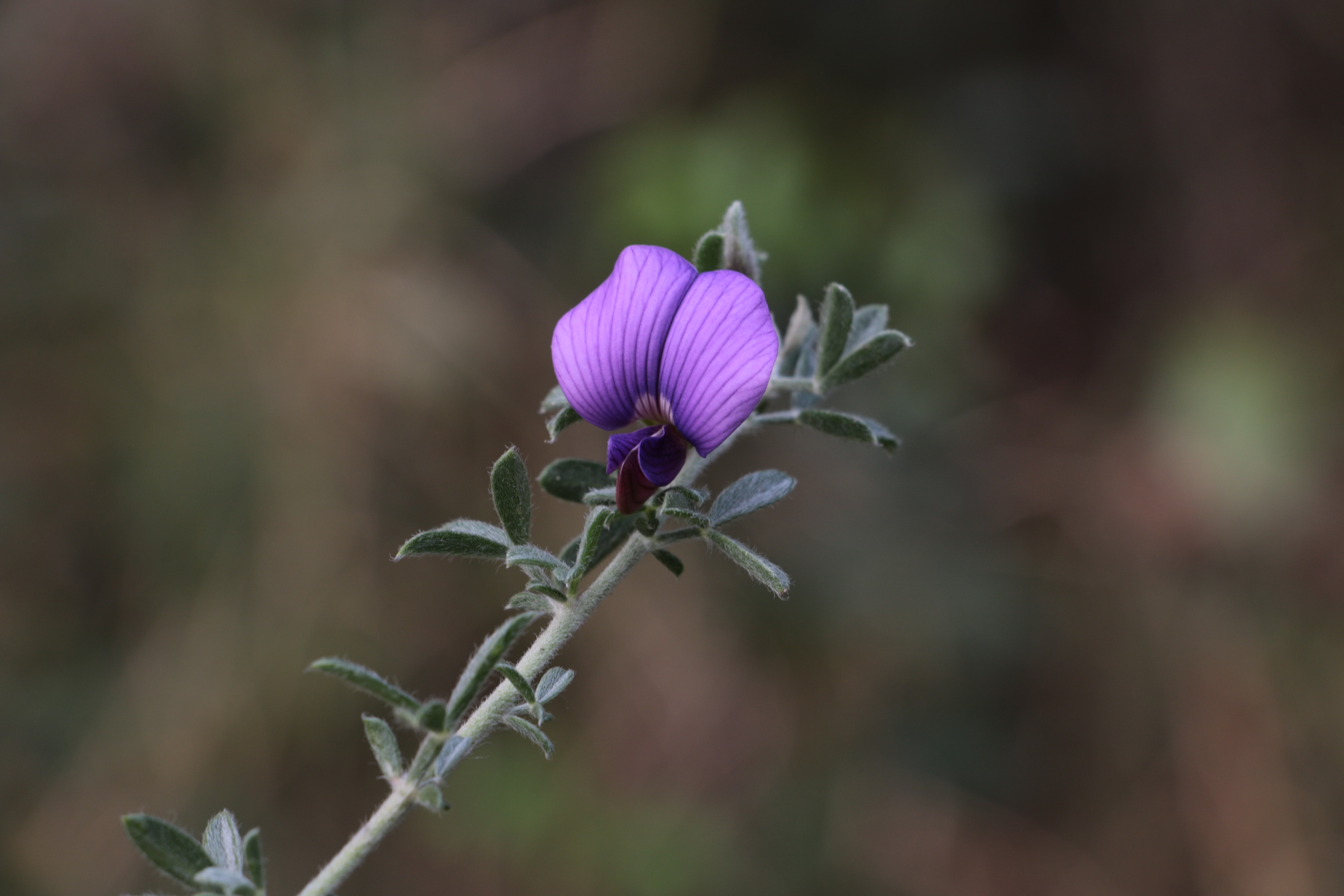
As the light softened and we called it a day, we made one last stop to admire Lotononis lotononoides—a somewhat elusive legume with purple flowers and bristly, slightly inflated hairy pods.

As we left the reserve behind, a quiet sense of gratitude lingered—grateful for rare flowers, for shared knowledge, and for days spent learning from the land. 


Kate carefully recorded all the fine details of Hesperantha mtamvunae in situ, capturing its delicate features with an artist’s eye and scientific precision.

Corm with woody tunic.

Stem unbranched.

Hesperantha mtamvunae
IRIDACEAE
Endangered D
South African endemic


Gnidia woodii 
THYMELAEACEAE

Pimpinella caffra
APIACEAE

Lasiosiphon anthylloides
THYMELAEACEAE
South African endemic


Scabiosa columbaria
DIPSACACEAE


Lotononis lotononoides
FABACEAE

Dimorphotheca fruticosa 
ASTERACEAE

Our lunch spot.


Ipomoea ficifolia 
CONVOLVULACEAE


Osyridicarpos schimperianus
SANTALACEAE


Indigofera tenuissima 
FABACEAE


Pelargonium luridum
GERANIACEAE

Vachellia natalitia 
FABACEAE
 Pale-bark Sweet Thorn

Watsonia densiflora


Anemone caffra
RANUNCULACEAE
Windflower
South African endemic


Polygala refracta 
POLYGALACEAE

Argyrolobium harveyanum
FABACEAE

Athrixia phylicoides
ASTERACEAE
Bushman's Tea


Colpoon compressum
SANTALACEAE

Ctenium concinnum
POACEAE
Sekelgras


Triumfetta pilosa
MALVACEAE


Pondoland CREW
Gail Bowers-Winters, Alf Hayter, Uschi Teicher, Anne Skelton, Graham and Kate Grieve, Maggie Abbott, Hiliary Henderson, Dorothy McIntyre and Tracy Taylor.


“The more you look, the more you see—and in places like Pondoland, there’s always more waiting to be discovered.” 


Monday, 14 July 2025

Beacon Hill

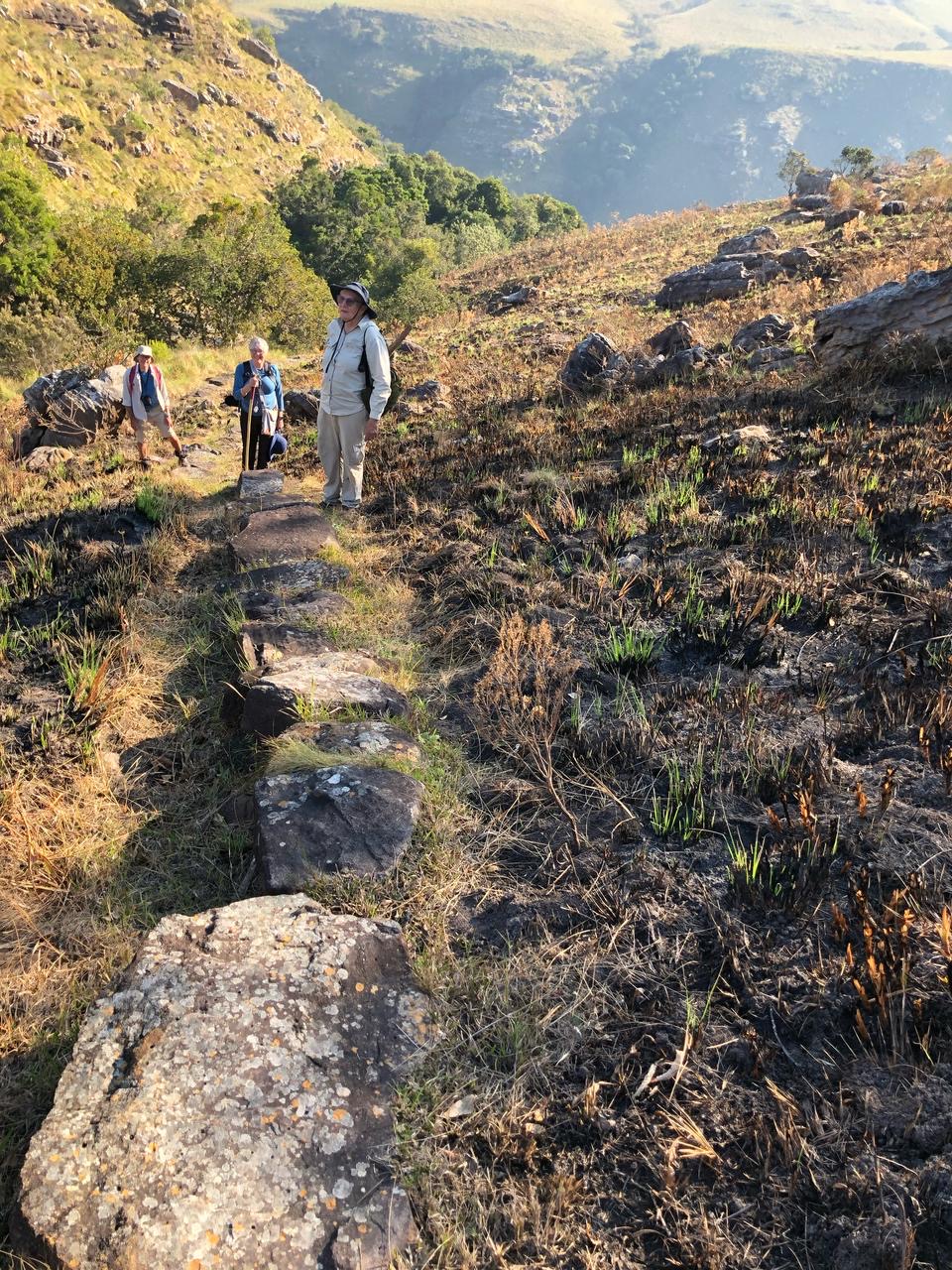
A small but eager group gathered at Beacon Hill for a gentle meander into the Umtamvuna Nature Reserve. The stone path, winding its way down into the forest, offered a tranquil beginning to the day.

The reserve had recently experienced a controlled burn, and with the charred earth still fresh, we were delighted to find Cyrtanthus breviflorus already in flower. This remarkable fire lily is well known for its rapid response to fire—typically blooming just three days after a burn. Its delicate yellow trumpets stood out vividly against the blackened soil, a hopeful sign of renewal and resilience.

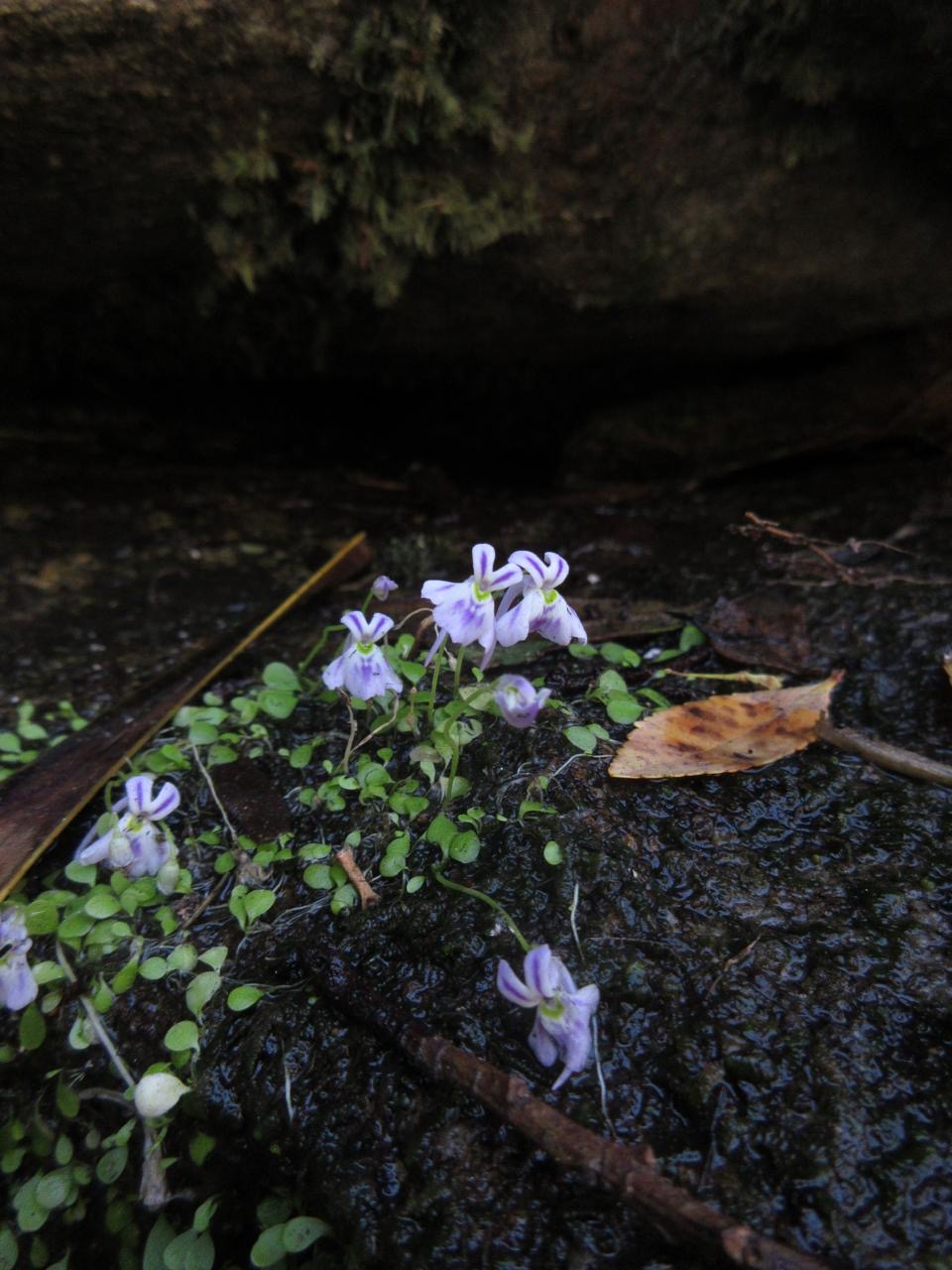
Following the course of a clear forest stream, we came across Persicaria decipiens in bloom, its soft pink flower spikes nodding gracefully above the water. On nearby wet rock faces, the tiny carnivorous Utricularia sandersonii revealed its charming, almost rabbit-eared flowers—a delight for those who know where to look.

The highlight of the morning was undoubtedly the discovery of Brunia trigyna, a species with a limited distribution and always an exciting find. Growing along the forest edge, the shrub was laden with buds, promising a dramatic floral display in the coming weeks. Encountering it at this early stage of flowering made for a particularly rewarding moment.

The day was both joyful and fulfilling, reminding us once again of the quiet magic found in these wild spaces—especially for those who take the time to look closely.

Brunia trigyna
BRUNIACEAE
Pondo Ghost-bush
Critically Endangered B1ab(v)+2ab(v); C2a(i); D
Photo credit:  Alf

Utricularia sandersonii 
LENTIBULARIACEAE
Bladderwort
South African endemic
Photo credit:  Alf


Persicaria decipiens
POLYGONACEAE
Photo credit:  Uschi

Cyrtanthus breviflorus
AMARYLLIDACEAE
Photo credit:  Alf


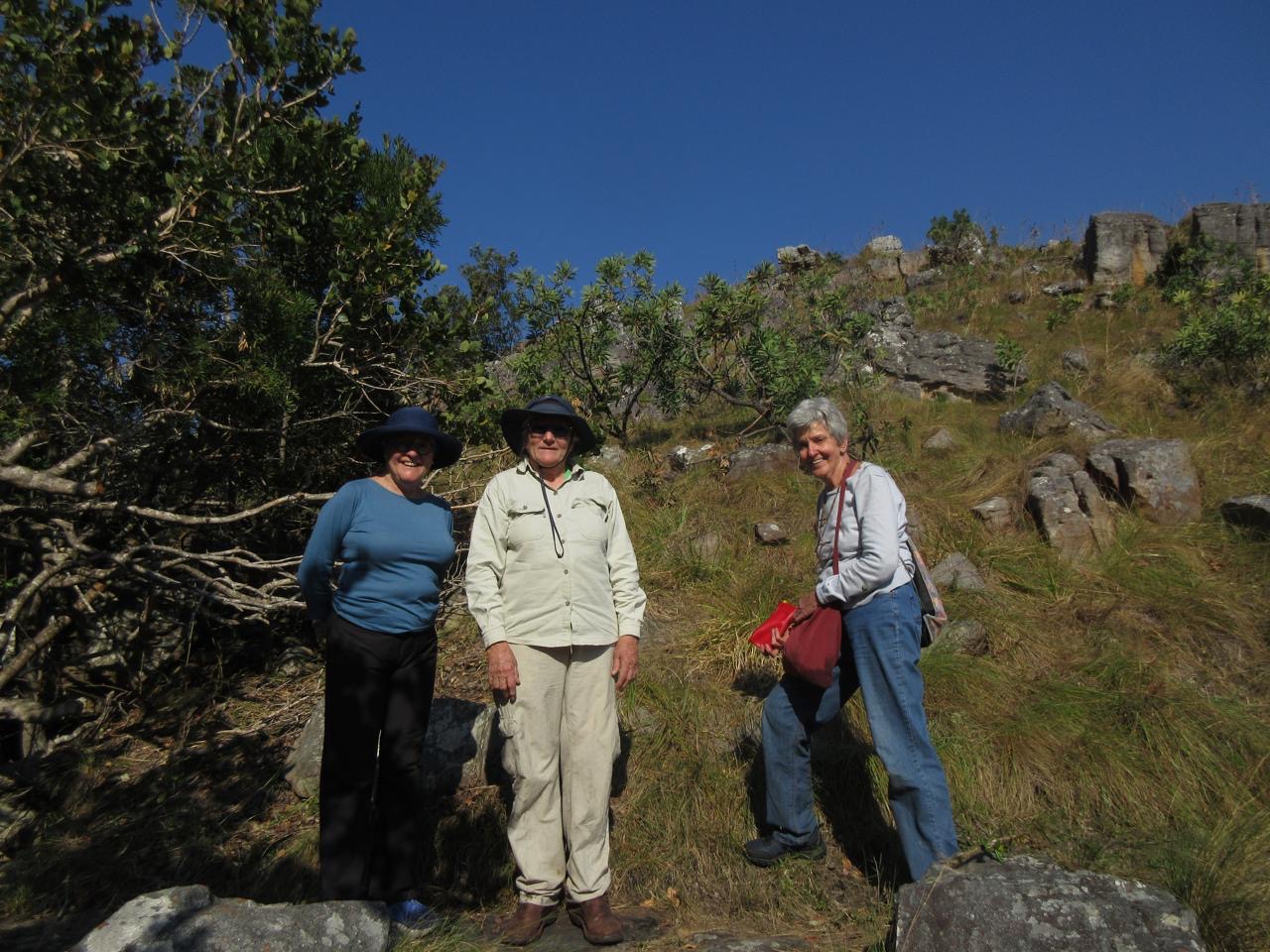
A happy Pondoland group.  Hilliary, Anne and Alf heading down to see the if the Brunia trigyna is flowering.  Photo credit:  Uschi

The old stone path that leads one down past Brunia trigyna and into the forest.
Alf, Hilliary and Anne.  Photo credit:  Uschi


Pondoland CREW
Hilliary Henderson, Anne Skelton, Ushchi Tercher and Alf Hayter

"To study a flower is to hold the entire ecosystem in your hand." —Carl Linnaeus


Iron Crown

On this field day, the Pondoland CREW group convened at our usual meeting point on Beacon Hill. We were pleased to welcome Lulu and Maike, who joined us for the day’s survey. Lulu generously brought homemade lemon cordial, prepared from lemons from her tree in Gauteng—a thoughtful gesture warmly received by the group.

Our team proceeded in convoy, travelling cautiously through Western Heights, where cattle are unfortunately still present within the reserve. We made our way to the far end of the track, stopping at The Iron Crown, specifically to record Erica cerinthoides, which had been in flower for several weeks. Although past peak, we were fortunate to observe the final flush of its brilliant coral-red blooms, standing out vividly against the senescing grasses. This species, known for its fire-adapted ecology, remains visually striking even at the tail end of its flowering phase.

On the rocky outcrops near the cliff edge, we located Centella glabrata, nestled in crevices where moisture lingers slightly longer. Further into the grassland, the team encountered numerous individuals of Eulophia parviflora, flowering prolifically. The population included both long-spurred and short-spurred forms, and we made comparative notes on individuals bearing leaves versus those flowering while still leafless—a known trait within this genus where flowering often precedes foliage emergence.

The survey pace was measured, allowing for detailed observations. Among the rocky patches, Burchellia bubalina was recorded in its uncommon red-flowered form. This species is typically orange-flowered, and we reflected on a rare yellow-flowered form previously observed in the region. The specimen observed was robust, demonstrating the species' well-known hardiness.

In the dappled shade beneath isolated trees, we recorded several moisture-stressed individuals, including Haemanthus albiflos, Crassula sarmentosa var. integrifolia, and Crassula perfoliata var. heterotricha. All showed signs of drought stress, indicative of the current dry conditions and the urgent need for seasonal rainfall.

As the group returned to the vehicles, a final highlight emerged. Ushi observed a flowering Moraea, and closer inspection confirmed it as Moraea elliotii, identified by its characteristic long basal leaf. True to its species behaviour, the flower had opened in the early afternoon—M. elliotii is known for its precise phenology, with blooms reliably appearing at approximately 14:00, and each lasting only for the duration of a single day.


Erica cerinthoides
ERICACEAE


Lulu and her daughter Maike.

Centella glabrata 
APIACEAE

"Where there's smoke, there's fire."


The valley below The Iron Crown

Burchellia bubalina
RUBIACEAE

Haemanthus albiflos
AMARYLLIDACEAE


Crassula sarmentosa var. integrifolia
CRASSULACEAE
South African endemic

Crassula perfoliata var. heterotricha
CRASSULACEAE
South African endemic

Moraea elliotii is a geophytic species belonging to the family Iridaceae. It survives extended dry periods by storing energy in an underground corm and emerges to flower only when environmental conditions—typically after rain—are favourable. The species is notable for its phenological precision: the delicate, powder-blue flowers open consistently in the early afternoon, around 2 o’clock, and each bloom lasts for just a single day.

The plant bears narrow, grass-like leaves that blend effectively into the surrounding vegetation, offering natural camouflage from herbivores. This morphological adaptation, combined with its underground storage organ, allows it to tolerate both grazing and seasonal fires. Moraea elliotii is frequently observed in recently burned grasslands, where post-fire nutrient availability and reduced competition provide ideal conditions for flowering and regeneration. 

Ushi and Alf looking at Moraea elliotii in the grasslands.

The long leaf coming from Moraea elliotii

Moraea elliotii
IRIDACEAE

Eulophia parviflora – The name says it all: “parvi” means small, and “flora” refers to its flowers. These delicate blooms come in pale shades of green, yellow, or sometimes with purple tones. The species often flowers in response to fire or the first rains.

There are two notable spur variations. Some plants bear a long, narrow spur that extends behind the flower—likely an adaptation for long-tongued insect pollinators. Others have a much shorter spur, which could reflect natural variation, environmental adaptation, or reduced reliance on specific pollinators. Interestingly, some populations or individuals produce sterile flowers, which may not set seed but still play a role in attracting pollinators to fertile plants nearby.

Like many Eulophia species, this orchid often flowers before the leaves emerge. You may spot the flowering spikes rising straight from bare ground, seemingly leafless. Only later do narrow or linear leaves emerge from the underground tuber. In some cases, the plant remains leafless at flowering time, or shows only rudimentary leaf growth.


Eulophia parviflora
ORCHIDACEAE

Taking a close look at the spurs growing on Eulophia parviflora


Polystachya pubescens 
ORCHIDACEAE

Ushi's Eskom-se Push socks! 


Pondoland CREW
Maggie Abbott, Hilliary Henderson, Alf Hayter
Guests:  Maike and Lulu Granig
Gail Bowers-Winters, Dorothy McIntyre, Anne Skelton and Uschi Tercher.

“We still do not know one thousandth of one percent of what nature has revealed to us.” 

                                                                                                                  - Albert Einstein