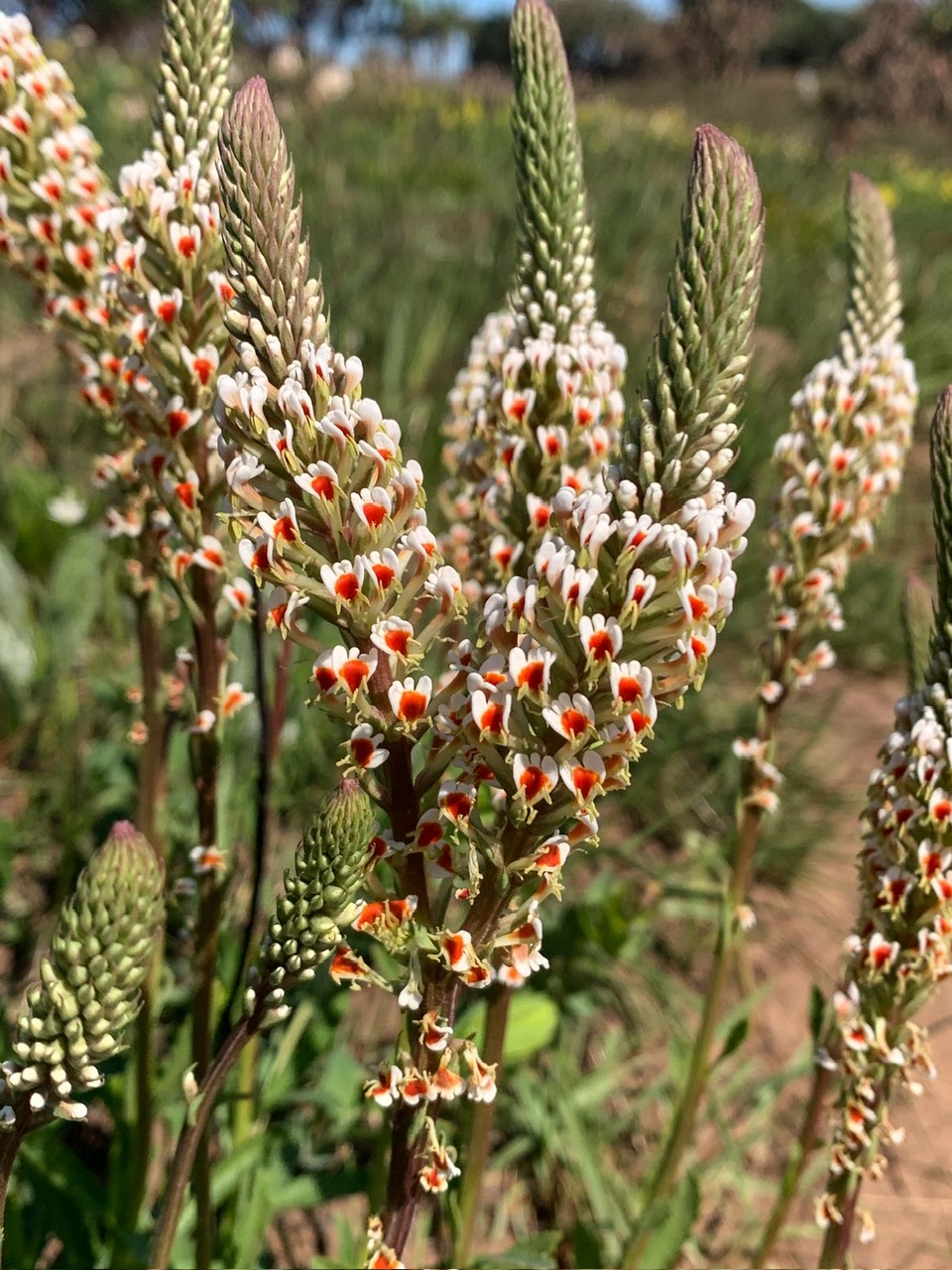
It was a cold and windy day and if you didn't have what it takes, you'd stay at home. As we drove towards Smedmore we passed Crowned cranes along the water’s edge. How magnificent these birds are. We only saw two. The die hards and the passionate joyfully got together headed to the Smedmore forests to get out of the brazen wind.
Being spontaneous and with a spirit of adventure we
were open to exploring in the surrounding area and drove down the hill sipping
coffee and sharing rusks in the shelter of the vehicles before going on foot.
It was a seriously awful day, weather wise.
Along the edge of the forest a colony of Buchellia
bubalina grew, both in orange and yellow. We found a few Watsonia
mtavunae in the grassland. We crept along the forest edge
cautiously and steered those too close to the edge away when trying to identify
the most magnificent tree fully in flower. Uschi identified it as our
endemic Homalium rufescens. Here we found Putterlickia retrospinosa growing. This too is an endemic and categorised
as "Near Threatened". It's common is Large-leaved Bastard
Spike-thorn. This it certainly was as when putting one's hand next to the leaf
there was a similar comparison in size. I love the spines that arch backwards
and not forwards. Uschi pointed out Osyridicarpos schimperianus growing
along the forest edge. This green stemmed creeper grows along with Smilax
anceps. This is a parasitic plant that has black spots on the leaves.
Dodonaea viscosa var. angustifolia was in seed, Anne's
"favourite". Not. Gail's favourite was seen along the forest
edge, Cryptocarya woodii.
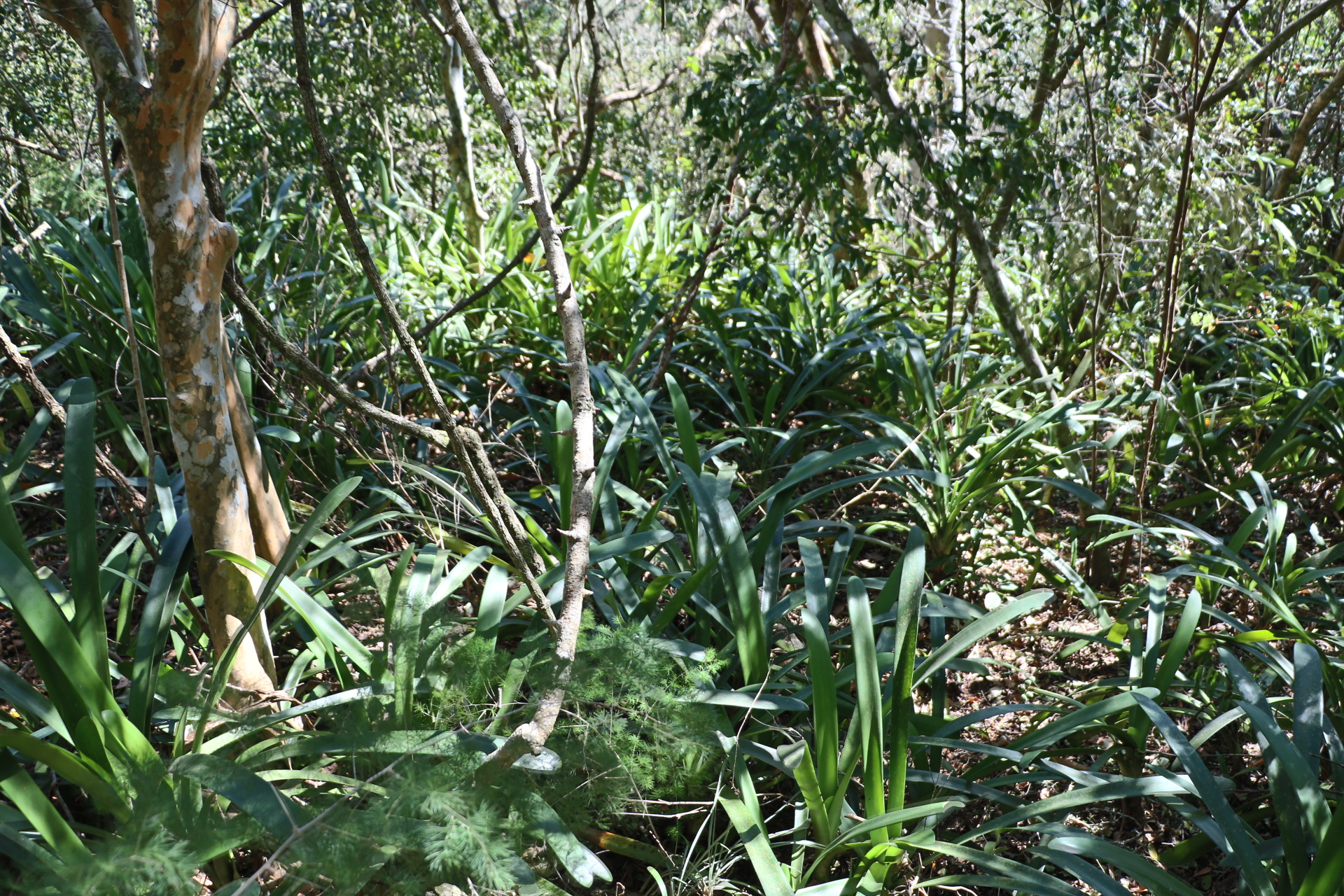
We sought refuge out of the wind for lunch and found a rocky outcrop which we eased our way into a forest which we had not explored. Tracy pointed out Erythroxylum emarginatum which was not in flower. Here we found here orchids, there flowers still dormant and then the greatest discovery. A colony of the most beautiful Clivia's. These would have have been Clivia robusta as they had already set seed. These beautiful specimens where waist high and growing safely on the edge and safe from poachers. We nestled in between these amazing plants and ate our lunch with our spirits soaring.
Heading home we again admired a stunning Syzygium pondoense. This tree is rare on endemic. In the grasslands
Anne found Bonatea porrecta! The little orchid people were
playing in the grass.
It truly was a memorable and magic day. So
unexpected. We were heading one way and landed up somewhere else and left
with our hearts like a rainbow finding a pot of gold.
 | ||
| Syzygium pondoense MYRTACEAE Pondo Waterberry Rare South African endemic
|


 |
| Bonatea porrecta ORCHIDACEAE |
 |
| A fortunate find. Well done Anne. Bonatea porrecta growing in the grass on the side of a large flat rock. |
 |
| Skirting along the edge identifying what is in flower. |
 |
| An Ochna awakening! |
 |
| Ficus glumosa MORACEAE Hairy Rock Fig |

 |
| Vangueria infausta subsp. infausta Rubiaceae |


 |
| Clivia robusta AMARYLLIDACEAE Vulnerable A2cd; B1ab(ii,iii,v) South African endemic |
 |
| Erythroxylum emarginatum ERYTHROXYLACEAE African Coca-tree |
 |
| Viscum SANTALACEAE |
 |
| Dodonaea viscosa var. angustifolia SAPINDACEAE |
 |
| Cussonia sphaerocephala ARALIACEAE  |
 |
| What could this be? |


 |
| Homalium rufescens SALICACEAE Small-leaved Brown-Ironwood South African endemic |

 |
| Cryptocarya woodii LAURACEAE Cape Quince |
 |
| Osyridicarpos schimperianus SANTALACEAE |

 |
| Dimorphotheca caulescens ASTERACEAE |

 |
| Gerrardina foliosa ACHARIACEAE |
 |
| Keetia gueinzii RUBIACEAE Climbing Turkey-berry |

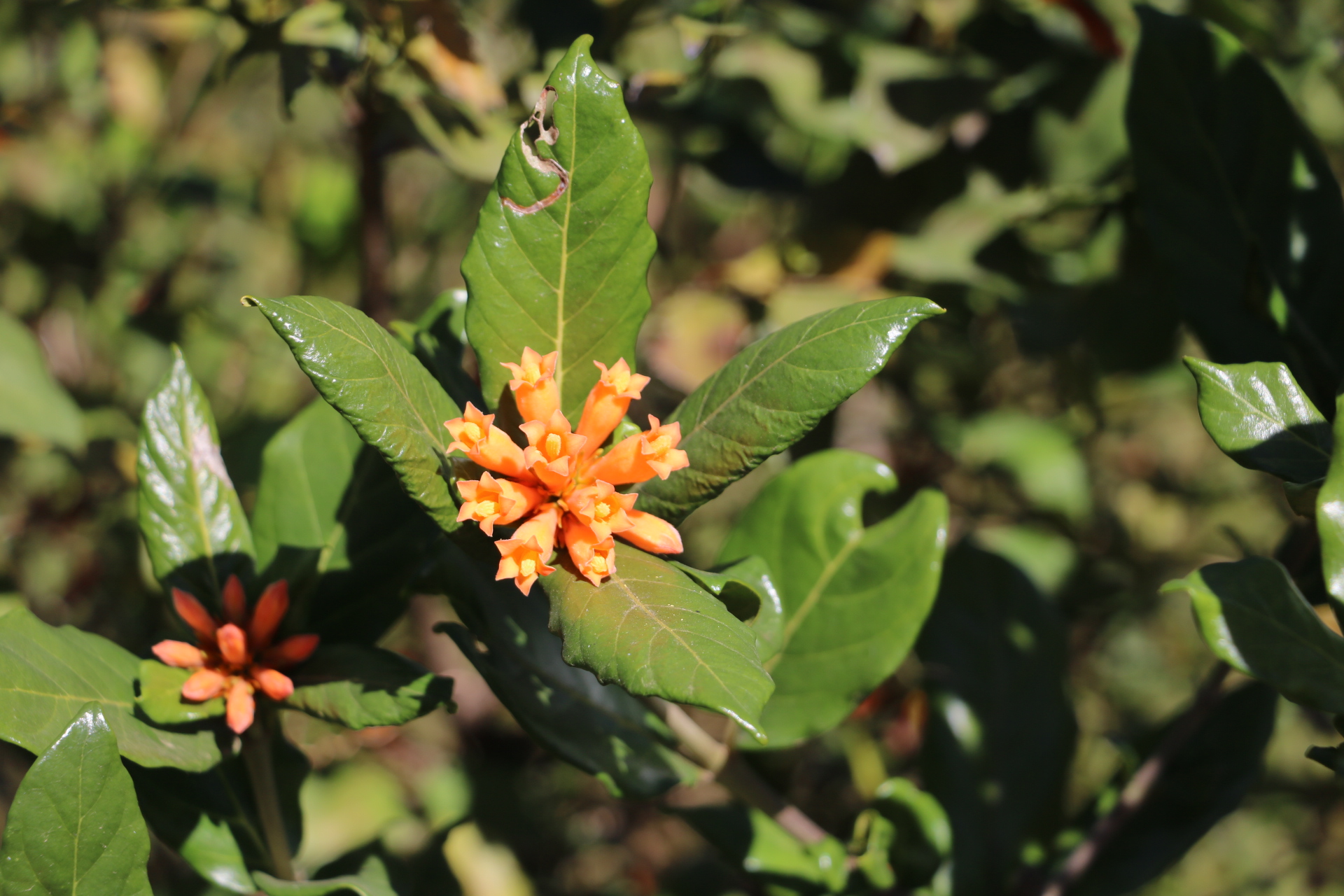 |
| Burchellia bubalina RUBIACEAE Wild Pomegranate |
 |
| Argyrolobium harveyanum FABACEAE |
 |
| Pondoland C.R.E.W./The Thursday Group Uschi, Anne, Tracy, Alf, Hilliary and Gail Live life in full bloom. |