It was the ideal weather in which to botanise. We had decided to go and explore the Manilkara Meander which on summer days gets extremely hot but on this Thursday it was overcast
and there was no wind so taking photographs of flowers that were in focus was
possible. It was an all girl group this
week and we all jumped into the car and journeyed forth, and using Q20 to open up
rusted locks, we meandered in.
 |
Manilkara Meander
|
 |
Boophone disticha
|
Normally we would have ventured left but we
found ourselves on unexplored terrain that we don’t frequent regularly as it is
steep and rocky and scorching. One truly does not have to charge busily about
but to simply pause and take a good look at what is growing where one is
standing. There is an abundance of
incredible plants growing if only one takes the time to observe.
One had to be sure footed as it was quite easy
to twist one’s ankle walking on such steep terrain and with hips and knees that
have been replaced one’s respect fell to the elderly as any injuries would come at a hefty price.
 |
Maggie and Dorothy
|
 |
Anne
|
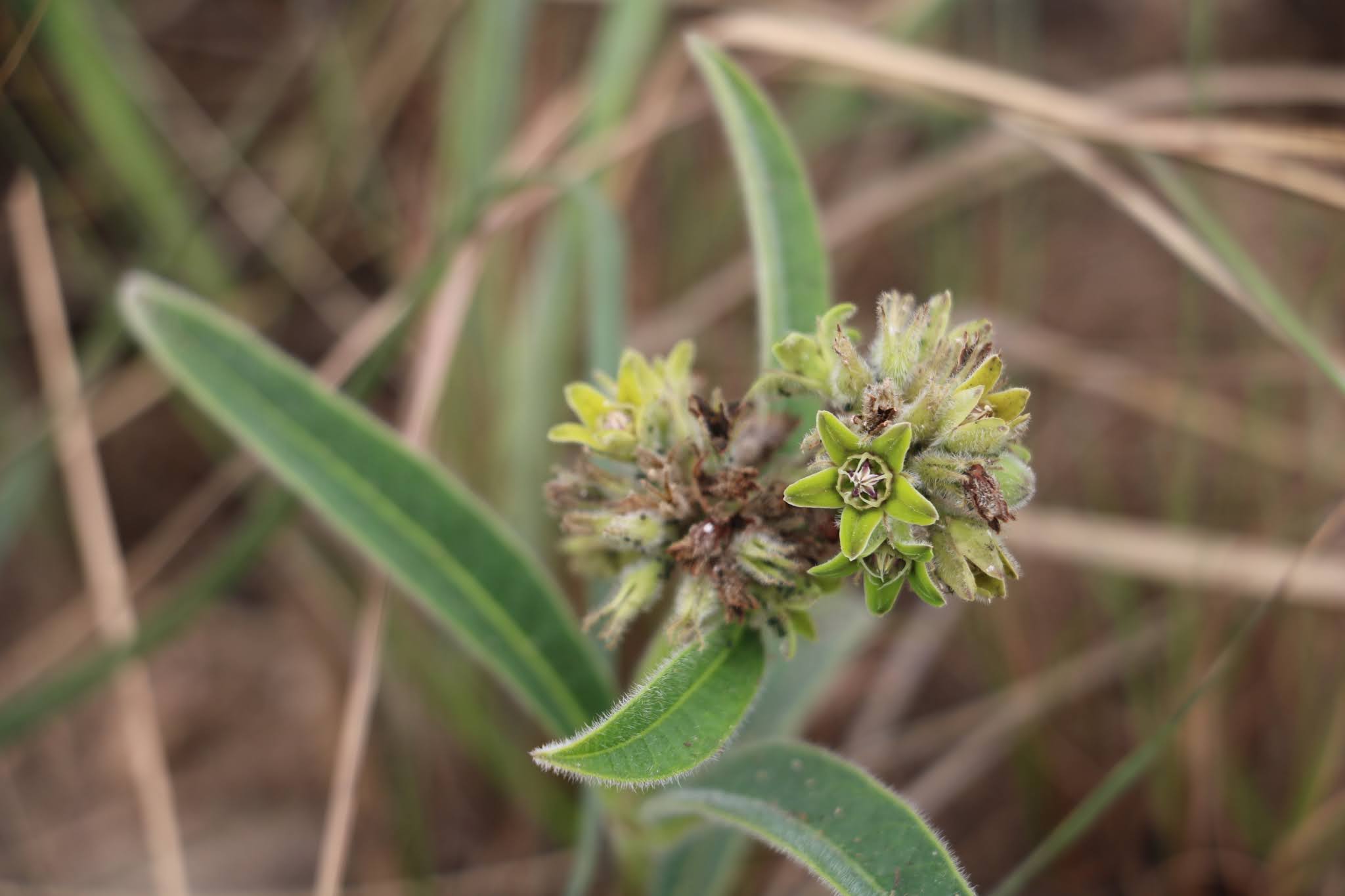
The plants that were wearing the crown for the
day were the Pachycarpus. I simply love
their structure. The Asclepias praemorsa
is so delicate and can be walked past so easily as the grass hides it. The
Raphionacme galpinii is also another that can be overlooked. I love its compactness of flowers and its
tight clusters of star like flowers.
 |
Pachycarpus asperifolius
|
 |
| Pachycarpus asperifolius |
 |
| Asclepias praemorsa |
 |
| Raphionacme galpinii |
 |
| Raphionacme galpinii |
 |
| Raphionacme galpinii with seed follicle |
So with our pace slow and observance we explore
as a group and sometimes divided. Always
within eye-sight. Anne had found a Polygala fruticosa nestled in
rocks and Tracey and Dorothy were identifying
which Polygala it was. I was meandering
down and my gaze fell first upon a rock that seemed to look as if it were a
guardian looking down at us and seeing who was walking on her territory angrily
and about to boom and pounce. My eye then
was fixed on a movement suddenly, just when I thought that it was so strange we
didn’t see snakes more frequently I then saw this beautiful Green Bush-Snake. It seems impossible but here’s a snake and it’s
climbing up on a surface that’s ruler straight and going straight up.
 |
| Polygala fruticosa |
 |
| Polygala fruticosa |
 |
The rock guardian watching down from above.
|
 |
Green bush-snake
|
 |
A sculptural rock face gazing up.
|
In the grasslands near cliff’s edges Watsonia
inclinata flowered, along with the occasional Hybanthus enneaspermus. Ocimum obovatum I always find beautiful every
time I take a photo. There was Thesium
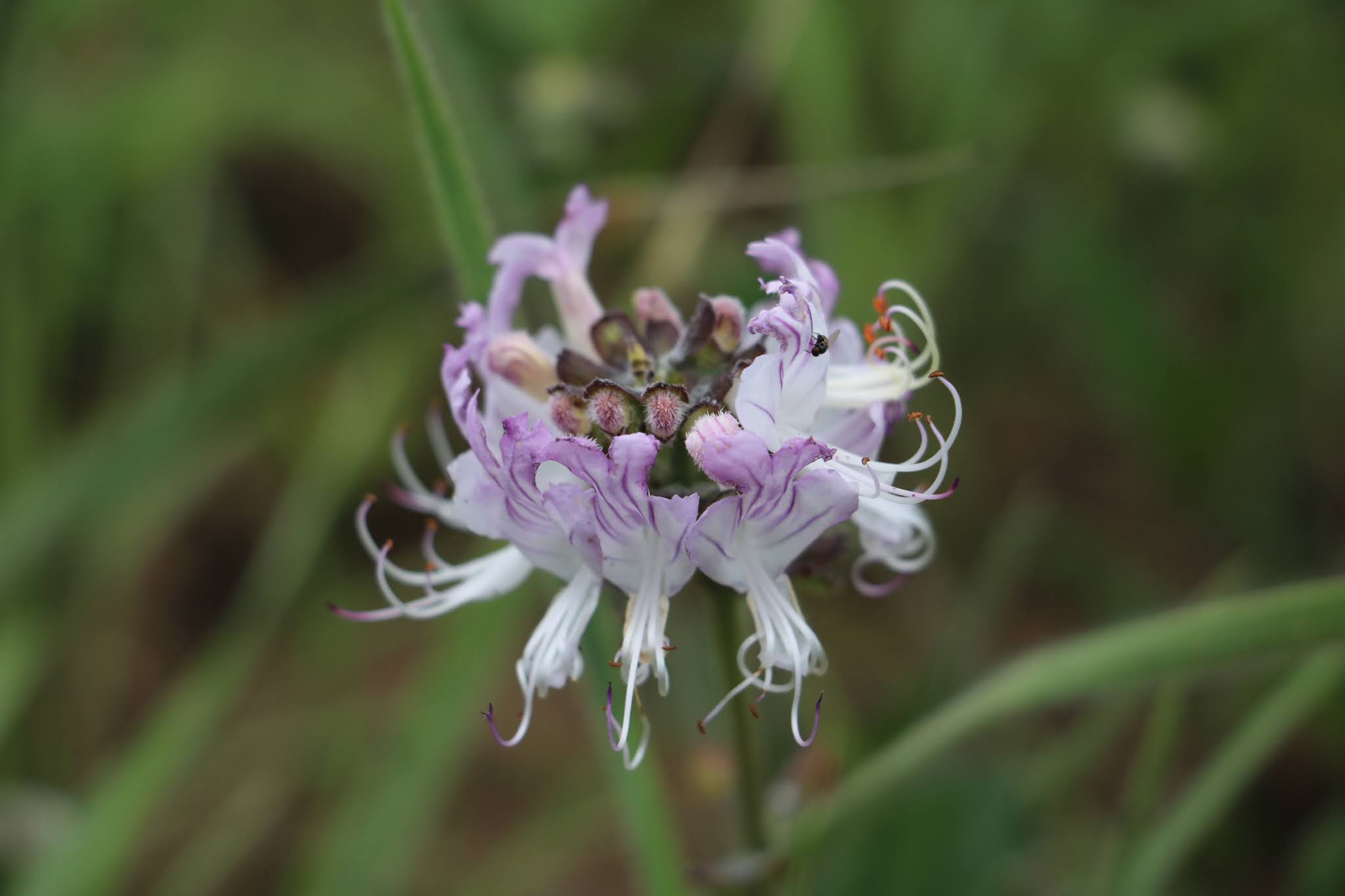
pallidum, Rotheca hirsuta and Vangueria infausta in flower. Ipomea crassipes
twined and Merwilla plumbea was seen both in its lilac and pink hues. Butterflies
danced and skipped and birds sang. Suddenly to
disturb this utopia a rifle shot was heard. There were poachers out finding the now almost non-existent
animals. Phone calls were made but nothing followed
up.
 |
| Watsonia inclinata |
 |
| Watsonia inclinata - in its various shades of drying colours. |
 |
| Ocimum obovatum |
 |
| Indigofera rubroglandulosa |
 |
| Indigastrum fastigiatum |
 |
Spindasis mozambiqua
|
 |
| Eulophia parviflora |
 |
| Afroaster |
 |
Ipomea crassipes
|
 |
Merwilla plumbea
|
After our lunch gazing upon a river that flows
and the Transkei we began meandering back.
Maggie and Dorothy continued with
their climb and Anne, Tracey and I ventured down further wishing to explore
further. It was just beautiful. We saw on a cliff’s edge Ehretia rigida in
flower. It was magnificent.
 |
| Ehretia rigida |
 |
Maggie and Dorothy
|
I’ve never seen Jasminum multipartitum flower
so prolifically and en masse. There was a Carissa bispinosa in flower and both
male and female Dioscorea dregeana were taking full advantage on a tree and growing
happily. Anne and Tracey had found some
invasive plants and quickly dealt with them. Gazing down with the river below the
Erythrina and Protorhus longifolia had set seed.
 |
Carissa bispinosa
|
 |
| Dioscorea dregeana - female seed heads |
 |
| Dioscorea dregeana - male flowers |
 |
| Jasminum multipartitum |
 |
| Ficus glumosa |
 |
Vangueria infausta
|
With excitement I called Anne and Tracey and
had seen a Pachycarpus which just seemed to be different from any of the ones
that we had seen today. I shouted, “It looks
like a salmon star-fish!” and Tracey pulled out her tape measure and we began
measuring its leaves and flowers. It was
very exciting seeing something in nature that one hasn’t seen before. We learnt later thanks to expert observations and was reported back that it was a Pachycarpus coronarius hybrid species.
 |
Pachycarpus coronarius hybrid species
|
With time pressing knowing we had a steep
ascent we pushed on admiring the Brachystelma rubellum and Rotheca hirsuta. In a shallow rock surface tiny Drimia
uniflora were flowering. One something
thinks how difficult it is to keep a house plant alive and yet here we have the
tiniest and strongest little plant that is smaller than half a grain of rice if
not smaller surviving the harshest of conditions requiring damp but having the
scorching sun which doesn’t kill it. I
simply love nature.
 |
| Brachystelma rubellum |
 |
| Rotheca hirsuta |
 |
Drimia uniflora
|

|
Anne Skelton, Tracey Taylor, Gail Bowers-Winters, Dorothy McIntyre, Maggie Abbott
|
"Like wildflowers you must allow yourself to grow in all the places people thought you never would". Anonymous.
With sincerest thanks to all who made this day possible,
with transport, knowledge, and their love of plants which unite this group together weekly.