We set off to Rossmin in the Umtentweni vicinity where we were to meet up with Sarah who had travelled from
Pietermaritzburg and along route she brought with her the local inyangas of
the area. A inyanga is a traditional healer or diviner, especially one specializing in herbalism. "inyanga" means "man of the trees" in Zulu. Inyangas are healers that make medicine from herbs, roots and bark. .Some of their ancestors had their grave sites in this
conservation area that was set aside by the Rossmin mines. The inyangas knew this
land well.
It was a large group of women with exception to one man who was
their interpreter and in our C.R.E.W. group the one man was our Graham who joined us with Kate for the morning. It was lovely to be re-united. For the number of women that had congregated
it was very quiet and there was a great sense of peace amongst us with the one
great commonality being our love for plants.
 |
| The day begins with an introduction to each other. |
Our group divided left some botanizing on their own whilst others
joined the inyangas. It was the tree section the inyangas seemed more
interested in and once they arrived at the grassland, they came to a standstill
not wanting to go further as they said that there was "nothing
there".
 |
| Shorty after they reached the grassland they came to a stop. |
This was to our surprise for we knew there to be medicinal plants
and felt quite pleased that the plants had drawn no attention. We had seen from
past excursions that plants in this area had been dug out and always wondered
what the plant was that was removed in its entirety. We had had often seen
signs of the muti-market trade as the Albizia adianthifolia was
one of their favorites and seemed which they seemed to take strips of bark on a
regular go-to basis. This tree is used as a purgative and herbal medicine for numerous reasons some being reproductive problems in women, skin diseases and sexually transmitted infections...
We were heartened to learn that these inyangas were taking plants that were only specific to their clients needs and not harvesting unnecessarily.
 |
Albizia adianthifolia var. adianthifolia
Flat-crown Albizia
FABACEAE
|
 |
A local inyangas in training.
|

Ziziphus mucronata also known as UmPhafa or commonly as the Buffalo thorn is used to collect the spirit of a deceased person from their place of death, and taken to their final resting place. Traditionally the family elder leading the pallbearers carry the branches. This plant is also used as a protection of cattle kraals and against lightning. The leaves when crushed are used to stop bleeding and the both the bark and leaves are used to treat skin infections, pain relief and respiratory problems, particularly for stomach and chest illnesses. The roots have been used to treat snakebite wounds and the skin purifying steam bath is made from the bark. The flowers are used as a fish poison.
 |
The one thorn is an indicator of the future and the other of the past.
|
 |
| Ziziphus mucronata subsp. mucronata |
Blinkblaar-wag-'n-bietjieRHAMNACEAE
|
Some of the plants that the inyangas showed an interest in was Helinus
intergrifolius It is used as ritual body wash and an emetic and believed to
bring good luck with positive results.
It is also an “ubulawu” (dream-inducing) plant used by some in rituals
to facilitate communication with ancestors.
 |
Helinus integrifolius
Soap Bush |
The Passiflora suberosa is used to treat diabetes,
hypertension and skin diseases. The
leaves are potent have are both an antioxidant and have antibacterial
qualities.
Vachellia karroo (former Acacia karroo) is used as a herbal
medicine for diseases and ailments such as cold and flu, malaria, dysentery,
wounds amongst other things and is used as a treatment to both human and animals.
Clematis brachiata’s medicinal use is equally as long with the
leaves that can be stuffed into shoes to ease blisters, aches and pains. The leaves can be placed underneath the saddle
of a horse to prevent sores and fresh leaves can be placed under one’s hat to
keep the wearer cool and protects one against the harsh effects of the
sun. What a plant! A tea can be made using the leaves so ease headaches,
coughs and colds, chest ailments and abdominal upsets. This tea can also be
used as a soothing wash for aching feet, soothes cracked skin, blisters and
once cooled it can be used as an eyewash for tired red eyes. Using boiling water and poured over the roots,
stems and leaves and the steam inhaled is eases colds, sinus infections, asthma
and malaria. If one places the leaves,
stem, flowers and seeds into one’s bath and lie in it to soak is helps ease
aching muscles. What a go-to plant to have!
 |
Clematis brachiata
|
Traveller's Joy
Erythrina lysistemon also known as the Lucky bean tree or Umsinsi, is
associated with Zulu royalty and these trees are planted on the graves of Zulu chiefs.
This tree is also said to have antibacterial, anti-inflammatory and analgesic
properties.
Grewia occidentalis,
the Cross-berry or iLalanyathi’s fruit can be used to sweeten milk and the
decorative flowers are used around a kraal.
The branches of this tree were used to make bows and assegais.
 |
Polygala hottentotta
Small Purple BroomPOLYGALACEAE
The muti "love potion".
|

 |
Rhynchosia harmsiana
FABACEAE |
 |
Leonotis leonurus
Wild DaggaLAMIACEAE
Leonotis leonurus is used as a traditional medicine and used for fevers, headaches and a wide range of ailments. The leaves and roots are used as a natural remedy in treating snakebites and a charm to keep snakes away. The flowers and leaves are used to treat tapeworm. The twigs if added to a warm bath soothe itchy skin and relive cramps in the muscles. The dried leaves and flowers are said to have narcotic properties and bring on a calm sensation or euphoric feeling when smoked. It has been reported to be similar to Cannabis. The dried leaves can also be used as a tea. |
 |
Notobubon laevigatum
APIACEAE
|
This plant is believed to have magical
properties and used in the treatment of miscarriage, post-partum to expel the
retained placenta, prostate problems and renal diseases and tuberculosis.
It's also used to treat arthritis. It helps with high blood pressure,
water retention and obesity, bladder ailments and kidney infections.
 |
Lopholaena platyphylla
Broad-leaved Fluff-bushASTERACEAE |
 |
| Tracy having a closer look at the flowers of the Lopholaena platyphylla. |
 |
Eucomis autumnalis
Pineapple LilyHYACINTHACEAE |
 |
| Typical new growth on Euclea natalensis |
 |
Euclea natalensis
EBENACEAE
|
 |
Triumfetta pilosa
MALVACEAE |
 |
Dalechampia capensis
InzulaEUPHORBIACEAE |
 |
Tecomaria capensis
Cape HoneysuckleBIGNONIACEAE |
 |
Brachylaena elliptica
Bitter-leaf Silver-oakASTERACEAE |
 |
Gymnosporia rubra
Red-flower SpikethornCELASTRACEAE |
 |
Gymnosporia rubra
Red-flower SpikethornCELASTRACEAE |
 |
Hippobromus pauciflorus
ValsperdepisSAPINDACEAE
|
 |
Hibiscus fuscus
MALVACEAE
|
 |
Grewia hispida
Drakensberg RaisinMALVACEAE |
 |
Ipomoea wightii var. wightii
CONVOLVULACEAE
|
 |
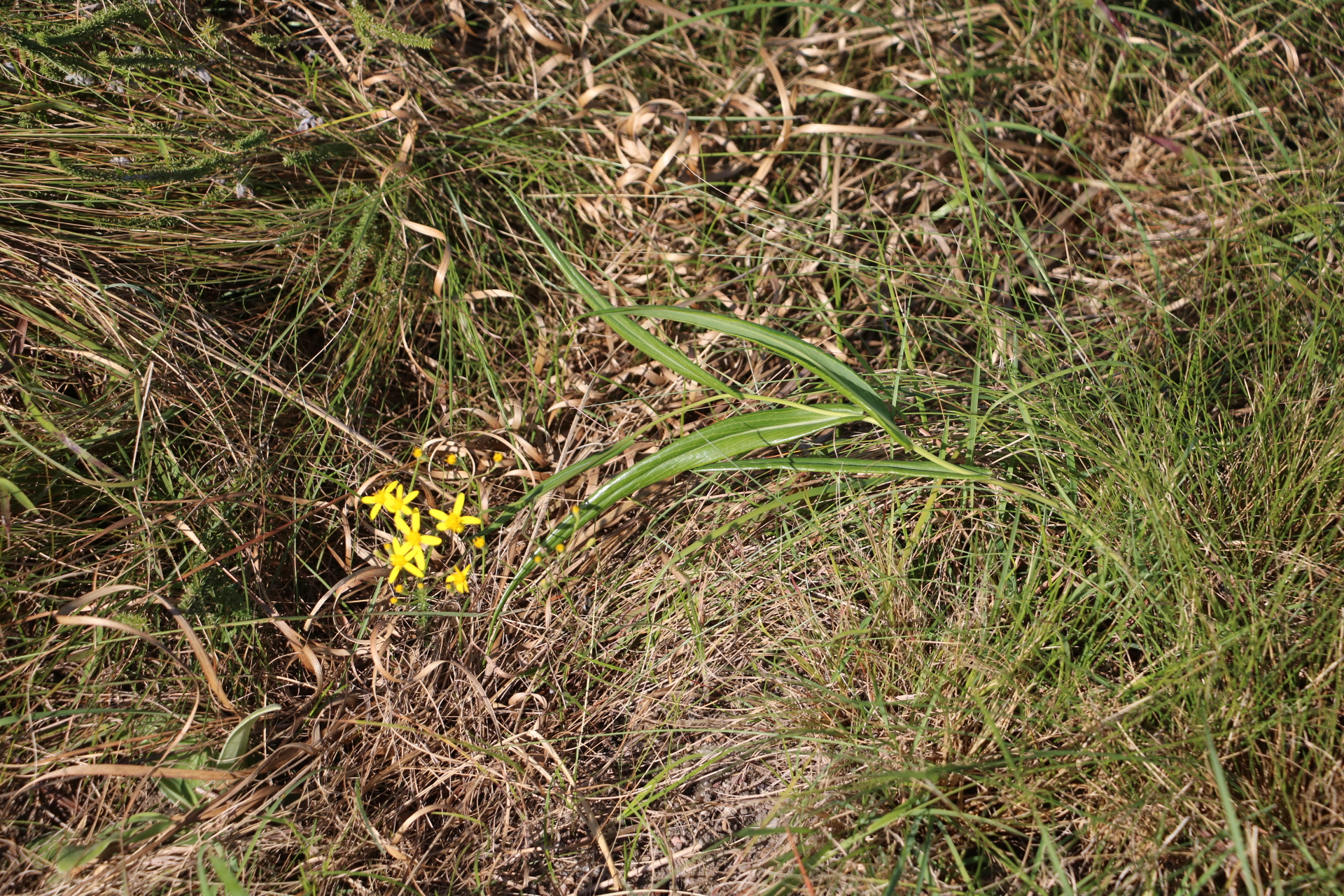
Senecio deltoideus
Canary CreeperASTERACEAE
|
 |
Abutilon sonneratianum
Wild HibiscusMALVACEAE |
 |
Priva flabelliformis
VERBENACEAE |
 |
Ipomoea plebeia subsp. africana
CONVOLVULACEAE
|
 |
| Kate checking Debbie's note book. |
 |
Debbie and Kate having a good chuckle, the joys of writing down botanical names can leave one smiling.
 | | Graham trying to get a specimen of the Oxalis for correct identification as it is believed that it can only be done by looking at the bulb! Gail took up the challenge and sat their carefully digging away patiently and then viola! |
|
 |
Oxalis sp.
|
 |
Sida ternata
MALVACEAE
Photo credit: Tracy
|
 |
| Tracy, our leopard in the tree. |
 |
Sarah addressing the inyangas and expressing the importance of being the custodian's of the conservation area that is set aside in this mining area.
For conservation to be successful, conservation teams need to comprise different types of
specialists, including indigenous groups that have over the years managed and ensured
the sustainability of natural plant resources. |

We all left feeling richer for coming into contact with each other and in sharing our knowledge with each other and for being introduced to people who we wouldn’t not normally meet under normal circumstances. |
|
 |
C.R.E.W. and the local inyangas
|
 |
The local inyangas.
|
 |
Pondoland C.R.E.W.
Maggie Abbott, Anne Skelton, Dorothy McIntyre, Debbie King,
Gail Bowers-Winters, Tracy Taylor and Ushi.
Graham and Kate Grieve absent in photograph by present during the day.
|