Friday, 13 July 2018

Hesperantha at Smedmore (Thursday 12 July 2018)

As it was just over a year ago that we had collected specimens of an unknown Hesperantha at Cubica Heights, we decided to return to see how this population was doing. The first  specimens were sent to the Compton herbarium in Cape Town where it was confirmed as a new species. Apparently the species has now been described and the description is awaiting publication. 

When we arrived at Cubica Heights we found that there had been a management burn during the week and there was no chance of finding the Hesperantha here. Fortunately, while filing last-year's photographs on my computer, I realised that in fact we had seen this same Hesperantha previously across the valley at nearby Smedmore. We could see that only a narrow strip of a firebreak had been burned at Smedmore so we drove there, expecting better chances of finding the Hesperantha.

We strolled over the hill looking for habitat similar to the Cubic Heights site and it was not long before we were rewarded with the sight of a few of the large pink flowers of this newly-described Hesperantha protruding above the long grass. We soon realised that there were many of these flowers in this area and collected material for vouchers for Bews and the Natal Herbarium.


The new Hesperantha

The habitat in which we found the new Hesperantha

We walked further, exploring the grassland and found one or two Dierama igneum in flower as well as several Lasiosiphon anthylloides. Investigating the trees at the edge of the cliffs above the Umtamvuna River gorge, we found Polygala gazensis still in flower. There were several of the Pondoland endemics, including Faurea macnaughtonii with rufous new leaves. In the shade of a large rock outcrop we found a few more of the new Hesperantha.


Dierama igneum

Lasiosiphon anthylloides


Polygala gazensis

A discussion at the kranz edge

Further along where the cliff edge became more accessible, we found Maytenus peduncularis with two showy fruits. This reminded Maggie that the Maytenus abbottii (an Endangered Pondoland endemic) in her garden was flowering. 


Maytenus peduncularis 

By then we had reached the edge of the main Smedmore forest and there discovered  another subpopulation of the new Hesperantha. We observed several different insects visiting these flowers. At the forest margin we found Hypoestes aristata, Notobubon laevigatum and Euphorbia dumosa in flower. 

We entered the forest and found a cool spot to enjoy our lunch. I managed to sit under a Memecylon bachmannii bearing several fruits and Maggie chose a Bachmannia woodii that was sporting many clusters of flowers and buds. 

Hypoestes aristata

Notobubon laevigatum

Euphorbia dumosa


Memecylon bachmannii

Bachmannia woodii

Clambering a bit further through the forest, we found a viewpoint to look down into the gorge.


View down into the Umtamvuna River gorge from Smedmore forest

Leaving the forest we found more Hesperantha flowering in the afternoon shade of the forest. There was also Stachys sp and Senecio tamoides in flower and nearby we found a cluster of Riocreuxia torulosa seed capsules - clearly this last season had been a bumper one for this species.


Stachys natalensis

Senecio tamoides

A cluster of Riocreuxia torulosa seed capsules

We set off homewards, stopping at Maggie's house to see the Maytenus abbottii. We also found Erythrina latissma carrying a fair load of red and black seeds as well as Cassipourea gummiflua var verticillata with many seed clusters.

Maytenus abbottii

Erythrina latissima

Cassipourea gummiflua

Participants: Anne S, Graham G, Kate G, Maggie A, Tracy T.


Saturday, 7 July 2018

Looking for Aloes at Sikhulu Villiage near Bizana (Thursday 5 July 2017)

In 2017, Kate and I had managed to find the Eastern Cape population of Aloe candelabrum we had seen from Aloe Ridge and we decided to take our group to the site to see how well these aloes were flowering this year. We ensured that we had the necessary permission from the local headman via our colleague, Wendy Bongwana. Joined by Debbie and Sarel on this occasion, after meeting at the KFC in Port Edward we set off in three vehicles to Bizana and after a few misleading GPS turns eventually found our way to the site. From an Aloe candelabrum  point of view, the display was disappointing. There were plants exhibiting the range of colours we expected, but these were few and far between.

Nevertheless we spent a good length of time wandering around amongst the mostly dormant aloes, but still finding good examples of what sort of colour variation there was at this site.


A selection of colours of Aloe candelabrum inflorescences

A selection of colours of Aloe candelabrum inflorescences

A selection of colours of Aloe candelabrum inflorescences

A selection of colours of Aloe candelabrum inflorescences

Aloe candelabrum dotting the north-facing slope down to the
Umtamvuna River, few of these flowering

A selection of colours of Aloe candelabrum inflorescences

A selection of colours of Aloe candelabrum inflorescences

A selection of colours of Aloe candelabrum inflorescences

A selection of colours of Aloe candelabrum inflorescences

A selection of colours of Aloe candelabrum inflorescences

A selection of colours of Aloe candelabrum inflorescences

A selection of colours of Aloe candelabrum inflorescences

A selection of colours of Aloe candelabrum inflorescences

A selection of colours of Aloe candelabrum inflorescences

It was interesting to see the impact that livestock has had on the vegetation here. There were many stunted, small-leafed, Olea europa subsp. africana, almost bonsai-like in stature. We also found some that had managed to get above browse-level and in a few cases these had ripe fruits. Other trees and shrubs found included Dovyalis caffra, Cussonia spicata, Diospyros austro-africana, Schotia latifolia, Euclea crispa and E. undulata, Pappea capensis, Vangueria infausta and several, mostly leafless, Canthium mundianum.

 
Dovyalis caffra


Diospyros austro-africana

Euclea crispa with fruit

We were joined for a while by a local man with the name of Torch and he explained that they had experienced their last good rains in November last year - possibly explaining the poor showing of Aloe flowers. Despite these very dry conditions, we did find other flowering plants. There were many Dicliptera cernua, mostly prostrate, and occasional Kalanchoe rotundifolia, as well as some very spiny Macledium zeyheri subsp argyrophyllum but their flowers were mostly over.

We did find one orchid in bud - I think this was probably Habenaria epipactidea but with the buds still tightly closed it was impossible to be sure.

Dicliptera cernua

Kalanchoe rotundifolia

Macledium zeyheri ssp argyrophyllum

Possible Habenaria epipactidea

We found a patch of Blepharis integrifolia with their blue and white flowers in stark contrast to the dry and bare soil around them. We found a single Cucumis zeyheri fruit and an interesting cluster of bright yellow lichen on a shrub. We also found one of the larger trees hosting two species of Viscum, V. obscurum and V. rotundifolium, both of which were in fruit.

Blepharis integrifolia

Interesting lichen

Cucumis zeyheri fruit

Viscum obscurum

Viscum rotundifolium
Although this was one of our less strenuous walks, the warm sun and lack of wind made it very enjoyable. It was also good to see the vegetation of a much drier area for a change.

Participants: Anne S, Colin T, Debbie K, Dorothy M, Graham G, Kate G, Mark G, Sarel C, Tracy T.

Monday, 2 July 2018

Flowering now (July 2018)

Acalypha peduncularis (male)

Acalypha peduncularis (female)

Acokanthera oppositifolia

Afroaster hispida

Agathosma ovata

Allophyllus dregeana fruit

Aloe candelabrum

Asparagus cf plumosus

Athrixia phylicoides

Bachmannia woodii

Berkheya rhapontica

Berkheya speciosa

Bersama swinnyi fruits

Blepharis integrifolia

Cassipourea gummiflua fruits

Chironia albiflora

Clutia cordata

Clutia diceptata

Cyanotis speciosus

Cyrtanthus macowanii

Dicliptera cernua

Dimorphotheca fruticosa

Diospyros scabrida

Drimia calcarata

Drosera madagascariensis

Eriospermum mackennii

Erythrina latissima fruits

Erythrina lysistemon

Euclea crispa fruits

Euphorbia dumosa

Euphorbia striata

Genlisea hispidula

Gerbera piloselloides

Graderia scabra

Haemanthus albiflos

Halleria lucida

Hebenstretia dura

Helichrysum allioides

Helichrysum ecklonis

Helichrysum nudifolium var. oxyphyllum

Helichrysum pallidum

Helichrysum pilosellum

Hesperantha sp. nov. 
Hypoxis acuminata

Hypoxis angustifolia

Hypoxis filiformis

Hypoxis multiceps

Hypoestes aristata

Indigofera rubroglandulosa

Lassiosiphon anthelloides

Ledebouria revoluta

Lopholaena dregeana seed heads

Lotononis bachmanniana

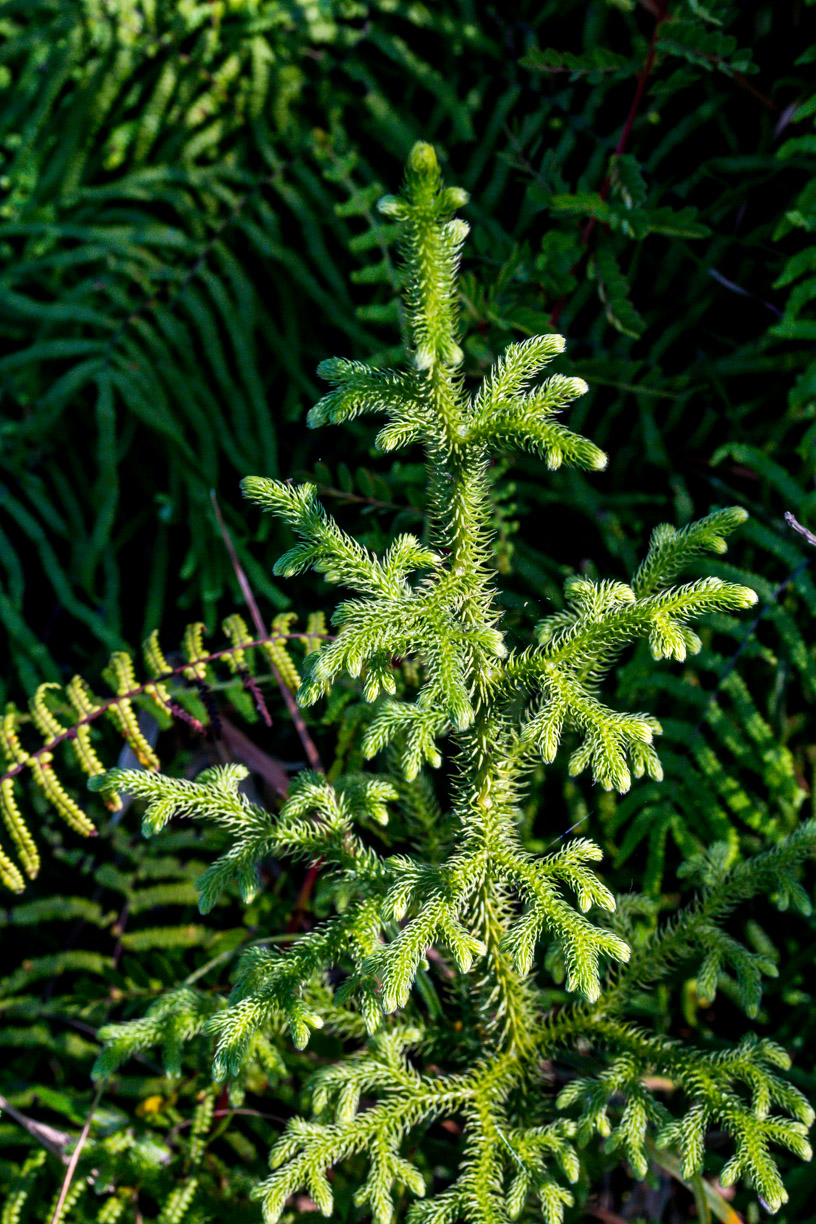
Lycopodiella cernua

Macledium zeyheri subsp. argyrophyllum

Maytenus abbottii

Maytenus peduncularis fruits

Merwilla plumbea

Memecylon bachmannii fruits

Moraea elliottii

Notobubon laevigatum

Ocimum obovatum

Oldenlandia tenella

Othonna natalensis

Oxalis semiloba

Pentanisia prunelloides

Polygala gazensis

Polystachya pubescens

Sansevieria hyacinthoides

Senecio coronatus

Senecio tamoides

Stachys natalensis

Struthiola pondoensis

Syzygium gerrardii fruits

Tephrosia shiluwanensis

Tetradenia riparia

Thesium natalensis

Tritonia gladiolaris

Ursinia tenuiloba

Utricularia sandersonii

Viscum obscurum

Viscum rotundifolium

Wahlenbergia capillacea